
 Image 1 of 3
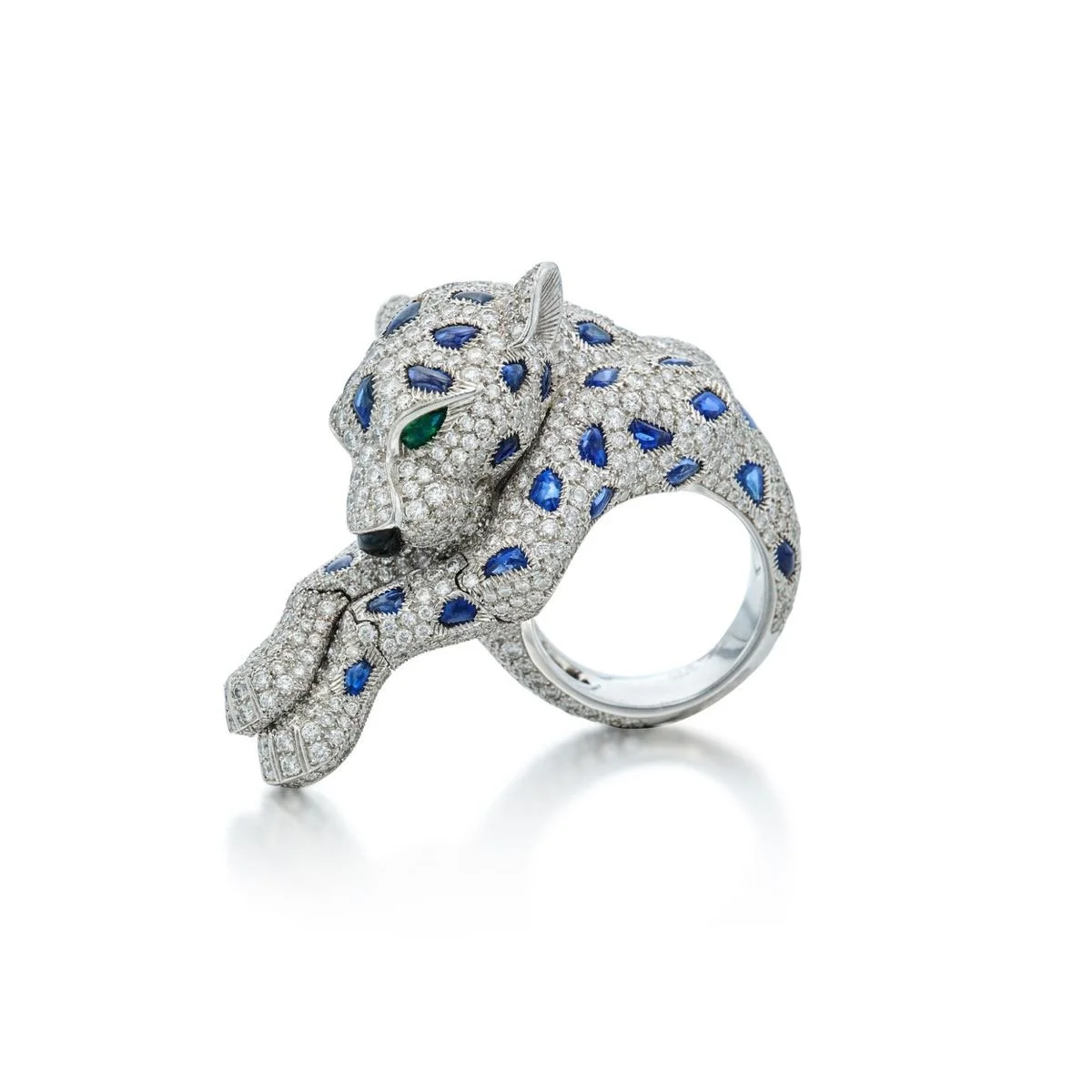 Image 2 of 3
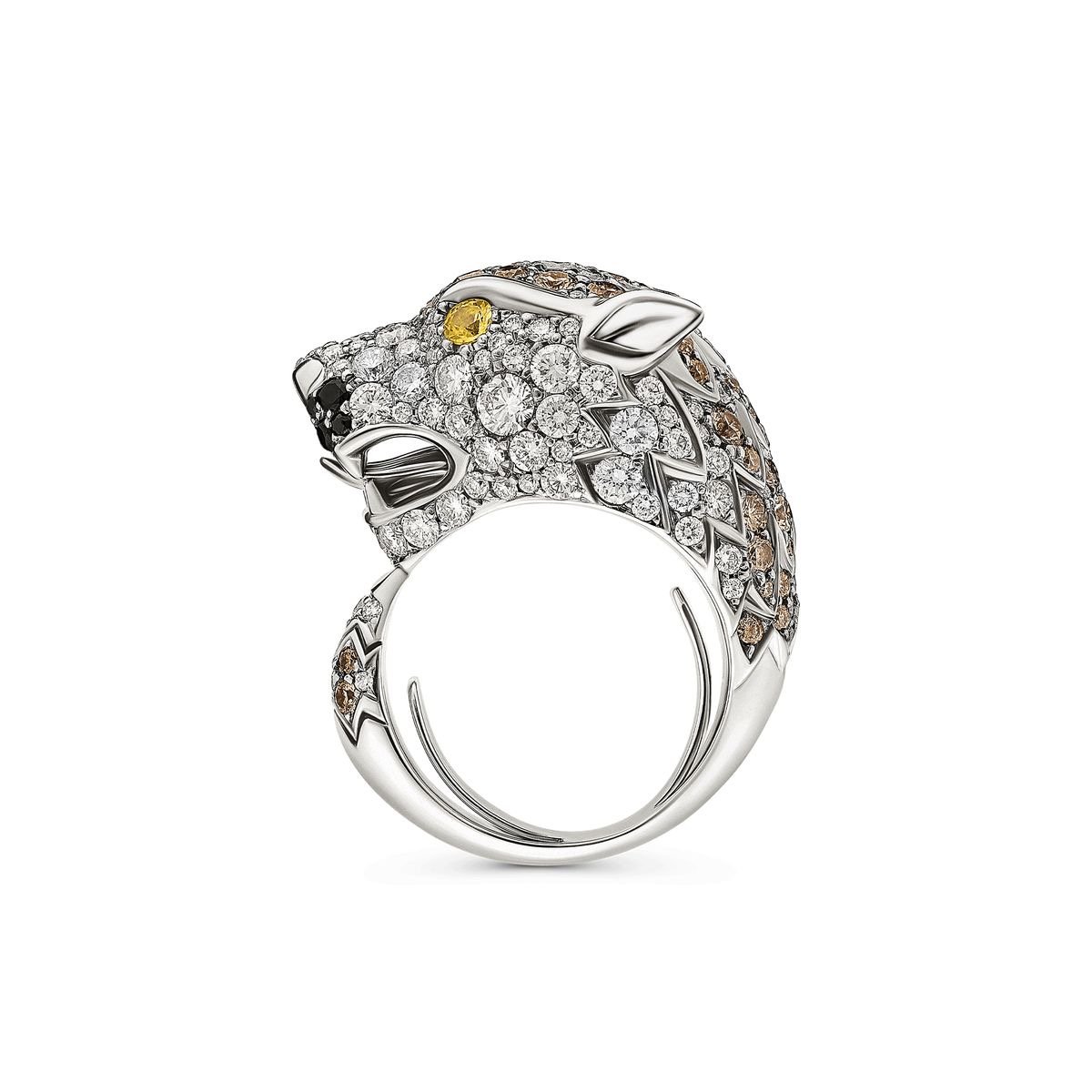 Image 3 of 3
III Level: High-Jewelry CAD Ring Design
The price depends on the specific piece.
Final cost is determined by factors such as size, materials, craftsmanship, customization, and current availability. Contact us with the exact item details for an accurate quote.
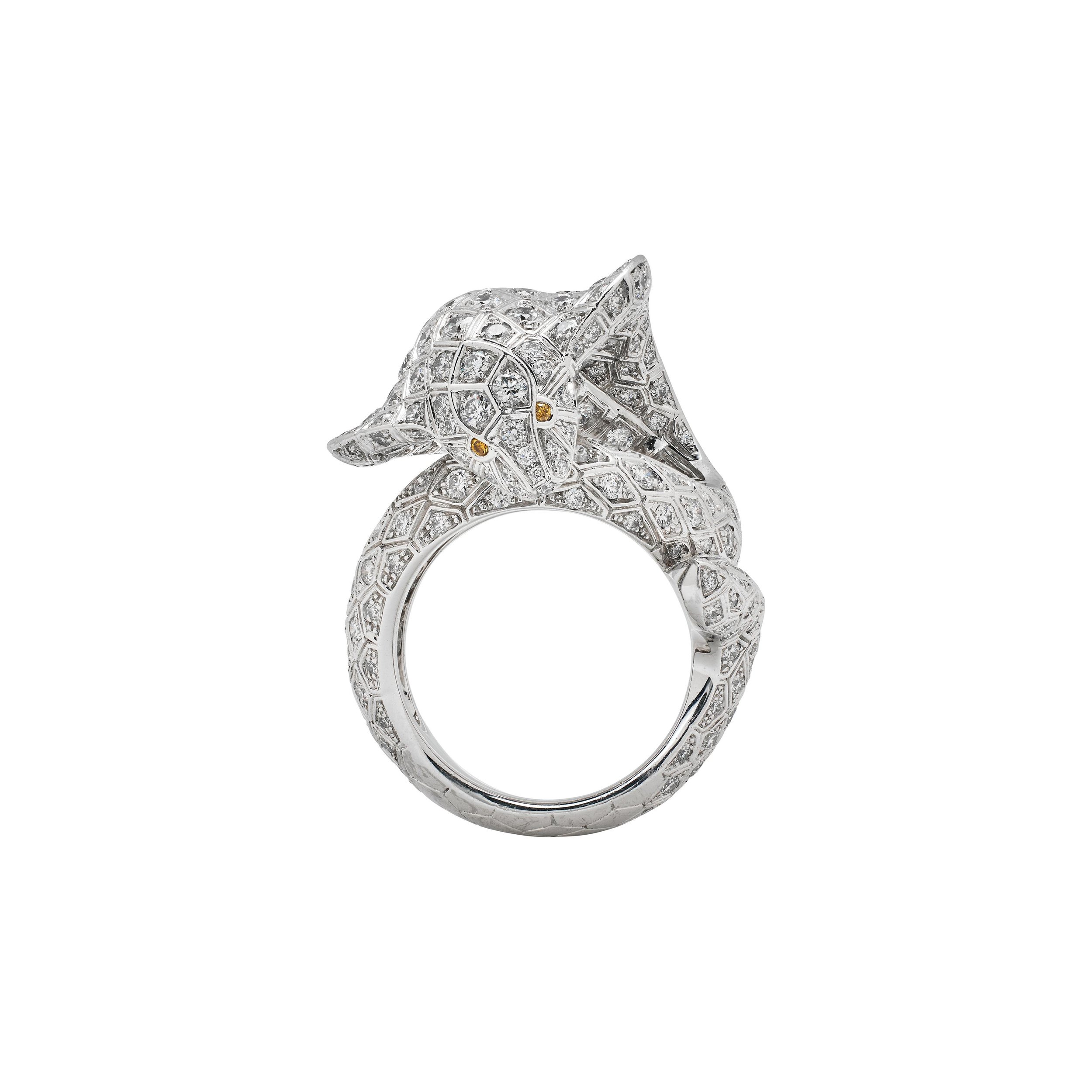
The third level of CAD ring design represents a leap from technical proficiency to high-jewelry artistry. At this stage, designers blend advanced CAD engineering with refined aesthetic judgment to produce rings that are both structurally sophisticated and visually extraordinary. Key characteristics:
Conceptual complexity
Multi-component assemblies: rings are conceived as integrated systems of parts—shanks, galleries, coronas, hidden rails, articulated elements—that work together visually and mechanically.
Layered motifs and negative-space interplay create depth and high drama. Designs often incorporate filigree-inspired frameworks, pierced pavé beds, and sculptural elements that require precise spatial reasoning.
Gem-setting intricacy
Mixed-setting strategies: bezel, bead/pavé, channel, flush, and tension settings are combined within a single piece, including transitions between setting types that must read cleanly at jewelry scale.
Fancy-cut accommodation: asymmetrical and complex pavilion geometries for marquise, baguette, shield, rose, and custom-cut stones demand precise seat geometry and crown-to-girdle clearance.
Hidden and haloed accents: under-galleries and micro-halos increase brilliance while complicating stone access and mounting sequences.
Mechanical and wearable engineering
Articulation and mobility: moving components—hinged bands, articulated halos, spinner elements—require tolerance analysis, fatigue consideration, and secure fastening while remaining comfortable for wear.
Comfort and ergonomics: weight distribution, shank tapering, and crown height are balanced to maximize wearability without compromising silhouette or stone security.
Serviceability: designs anticipate repair and re-stone protocols; removable modules, solder points, and access channels are modeled to allow post-production maintenance.
Fabrication and finishing demands
Multi-material integration: mixing precious metals, platinum inserts, and nontraditional materials (ceramic, carbon fiber) calls for modeled joinery, thermal differential planning, and galvanic isolation where necessary.
Complex casting and fabrication workflows: sectional casting, lost-wax with invested cores, precision soldering, and extensive hand-finishing are often required. CAD outputs include sprue planning, support for 3D printing of casting patterns, and CNC-ready files where applicable.
Surface treatments: graduated textures, knife-edge finishes, and micro-filed details are precisely located in the CAD model to guide finishing artisans.
Precision and verification
Tolerance-critical tolerancing: micron-level clearance for pavé beads, prong seats, and tension grips are modeled with exacting tolerances and verified with digital checkers and simulation tools.
Interference and collision detection: automated checks ensure moving parts do not collide; stone-to-metal interference is eliminated prior to prototype.
Stone-matching and inventory mapping: CAD assemblies include stone lists with dimensions and tolerances to align with procurement and setters.
Aesthetic storytelling and market positioning
Signature language: designs convey a narrative—architectural, botanical, or historical—translated into three-dimensional form and fine detail.
Limited runs and bespoke translation: models are prepared for small-batch production or one-off commissions, with modularity for personalization (engraving channels, custom stone layouts, proportion adjustments).
Workflow and collaboration
Cross-disciplinary coordination: high-jewelry CAD projects require iterative collaboration among designers, gemologists, model-makers, and master setters. CAD files integrate annotations, section views, and assembly blowouts to guide the production team.
Prototype iteration: multiple rapid prototypes (resin prints, metal test pieces) validate fit, hand, and optical performance before final casting and setting.
III level is defined by the marriage of creative ambition and uncompromising technical control. Designers must think like engineers and sculptors simultaneously: predicting how light will dance across tiny facets, how a hinge will endure thousands of openings, and how a ring will read as both a wearable object and a statement of high craftsmanship. Mastery at this level enables creation of heirloom-level jewelry that commands attention and withstands generations.
III Level: High-Jewelry CAD Ring Design
The price depends on the specific piece.
Final cost is determined by factors such as size, materials, craftsmanship, customization, and current availability. Contact us with the exact item details for an accurate quote.
The third level of CAD ring design represents a leap from technical proficiency to high-jewelry artistry. At this stage, designers blend advanced CAD engineering with refined aesthetic judgment to produce rings that are both structurally sophisticated and visually extraordinary. Key characteristics:
Conceptual complexity
Multi-component assemblies: rings are conceived as integrated systems of parts—shanks, galleries, coronas, hidden rails, articulated elements—that work together visually and mechanically.
Layered motifs and negative-space interplay create depth and high drama. Designs often incorporate filigree-inspired frameworks, pierced pavé beds, and sculptural elements that require precise spatial reasoning.
Gem-setting intricacy
Mixed-setting strategies: bezel, bead/pavé, channel, flush, and tension settings are combined within a single piece, including transitions between setting types that must read cleanly at jewelry scale.
Fancy-cut accommodation: asymmetrical and complex pavilion geometries for marquise, baguette, shield, rose, and custom-cut stones demand precise seat geometry and crown-to-girdle clearance.
Hidden and haloed accents: under-galleries and micro-halos increase brilliance while complicating stone access and mounting sequences.
Mechanical and wearable engineering
Articulation and mobility: moving components—hinged bands, articulated halos, spinner elements—require tolerance analysis, fatigue consideration, and secure fastening while remaining comfortable for wear.
Comfort and ergonomics: weight distribution, shank tapering, and crown height are balanced to maximize wearability without compromising silhouette or stone security.
Serviceability: designs anticipate repair and re-stone protocols; removable modules, solder points, and access channels are modeled to allow post-production maintenance.
Fabrication and finishing demands
Multi-material integration: mixing precious metals, platinum inserts, and nontraditional materials (ceramic, carbon fiber) calls for modeled joinery, thermal differential planning, and galvanic isolation where necessary.
Complex casting and fabrication workflows: sectional casting, lost-wax with invested cores, precision soldering, and extensive hand-finishing are often required. CAD outputs include sprue planning, support for 3D printing of casting patterns, and CNC-ready files where applicable.
Surface treatments: graduated textures, knife-edge finishes, and micro-filed details are precisely located in the CAD model to guide finishing artisans.
Precision and verification
Tolerance-critical tolerancing: micron-level clearance for pavé beads, prong seats, and tension grips are modeled with exacting tolerances and verified with digital checkers and simulation tools.
Interference and collision detection: automated checks ensure moving parts do not collide; stone-to-metal interference is eliminated prior to prototype.
Stone-matching and inventory mapping: CAD assemblies include stone lists with dimensions and tolerances to align with procurement and setters.
Aesthetic storytelling and market positioning
Signature language: designs convey a narrative—architectural, botanical, or historical—translated into three-dimensional form and fine detail.
Limited runs and bespoke translation: models are prepared for small-batch production or one-off commissions, with modularity for personalization (engraving channels, custom stone layouts, proportion adjustments).
Workflow and collaboration
Cross-disciplinary coordination: high-jewelry CAD projects require iterative collaboration among designers, gemologists, model-makers, and master setters. CAD files integrate annotations, section views, and assembly blowouts to guide the production team.
Prototype iteration: multiple rapid prototypes (resin prints, metal test pieces) validate fit, hand, and optical performance before final casting and setting.
III level is defined by the marriage of creative ambition and uncompromising technical control. Designers must think like engineers and sculptors simultaneously: predicting how light will dance across tiny facets, how a hinge will endure thousands of openings, and how a ring will read as both a wearable object and a statement of high craftsmanship. Mastery at this level enables creation of heirloom-level jewelry that commands attention and withstands generations.